The air in Ifo camp is heavy with dust, swirling between the narrow alleys of makeshift shelters. Amid the chatter of children and the call to prayer echoing from the mosque, whispers about sickness amongst locals often travel faster than facts. Here, in 2023, Amina Abdi (not her real name)—a 32-year-old mother of four – first felt the tightening in her chest and the cough that would not go away.
At first, she kept quiet. In her Somali community, TB was not just a disease—it was a mark. Amina feared the questions: Who gave it to her? Would she infect her children? Would her husband leave? . Even her family urged silence.
“I was told not to speak of it or else people will avoid me and my family for fear from this disease”
Amina Hassan, Dadaab refugee camps
With advice from her immediate family members, she was asked to seek healing from traditional healers, hoping for herbs and whispered prayers to ease the sickness. But her condition worsened, and by the time she opted to seek services from the nearest health facility, she was dangerously weak. Shame, fear, and stigma nearly cost her life—and threatened to pull her out of treatment before it had barely begun.
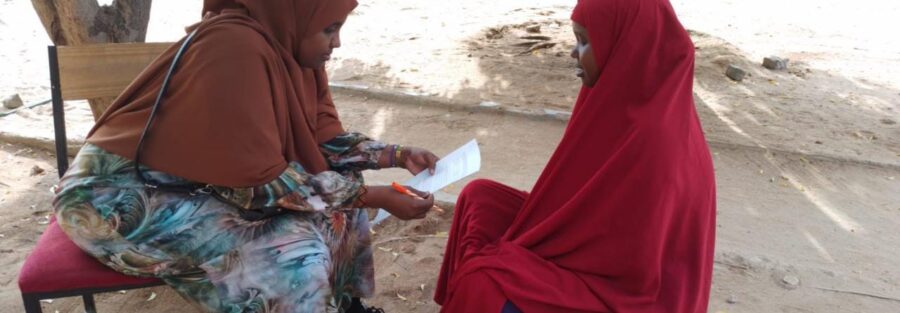
One day, she felt that uplifting spirit and that is when a Community Health Volunteer (CHV), trained under the project, knocked on her door. Patient and compassionate, the CHV explained what TB was, how it could be cured, and why immediate diagnosis and sticking with the long treatment mattered. The CHV did not come alone. He introduced her to a “TB Warrior”—a fellow survivor who had once walked the same path of fear and now stood tall as a peer supporter. For Amina, this connection was a lifeline. For the first time, she felt she was not alone.
Soon, Amina was invited to join a TB Empowerment Circle—a small group where survivors sat together to share their stories, encourage one another, and push back against the silence that stigma creates. There, she heard voices like hers: mothers who feared being shunned, young men who once hid their coughs, women who had been judged unfit for marriage. Slowly, Amina found the courage to tell her own story.
Her transformation was striking. With her consent, Amina began speaking during community forums and mosque gatherings, sharing openly that TB is curable and that silence kills more than the disease itself. Her words carried weight: she was not a health worker or an outsider, but a mother, a wife, a neighbor. “If I can be healed, so can you,” she would say. Her testimony cracked open doors for others who had stayed quiet for too long.
Amina also embraced digital empowerment. She joined sensitization meetings for the One Impact app, learning to record challenges in service delivery. For her, logging delays in medicine or staff shortages was more than data entry—it was a way of holding the system accountable. A woman once silenced by stigma now had a tool that amplified her voice to decision-makers.
Today, Amina is more than a survivor—she is a role model. Women in her block approach her for advice. She refers neighbors to health facilities, mentors new patients, and inspires others to complete their treatment. Health workers now call on her to speak during awareness events. In her neighborhood, the whispers around TB are quieter, the stigma weaker, and the courage to seek care stronger.
WOHED with technical and financial support from STOP TB Partnership, a life-saving project to educate, refer and link communities with available TB services has been ongoing for 1 year uplifting more than 1,500 vulnerable households in collaboration with the National Ministry of Health, Garissa County Department of Health and refugee actors